7 February - 14 March 2026
Australian Print Workshop is delighted to announce that the prestigious APW George Collie Memorial Print Award has been awarded to Richard Harding (1959-2025) in recognition of his sustained and influential contribution to the Australian printmaking community - as a print artist, educator and activist.
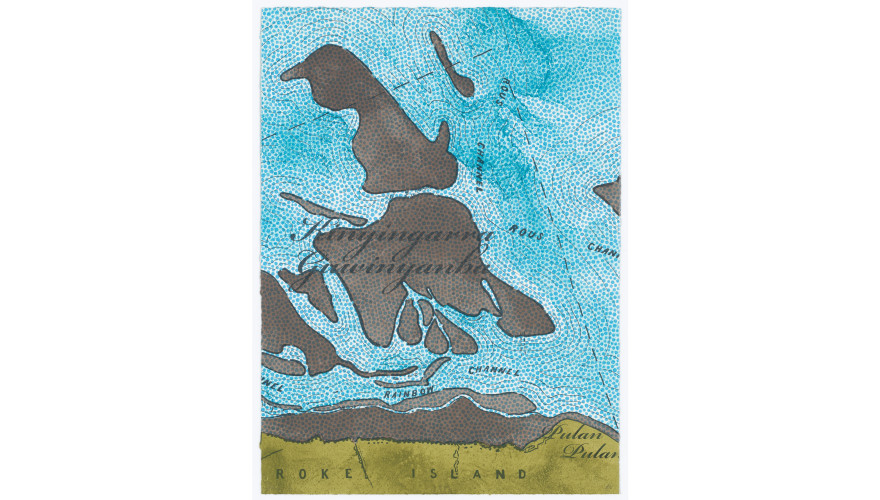
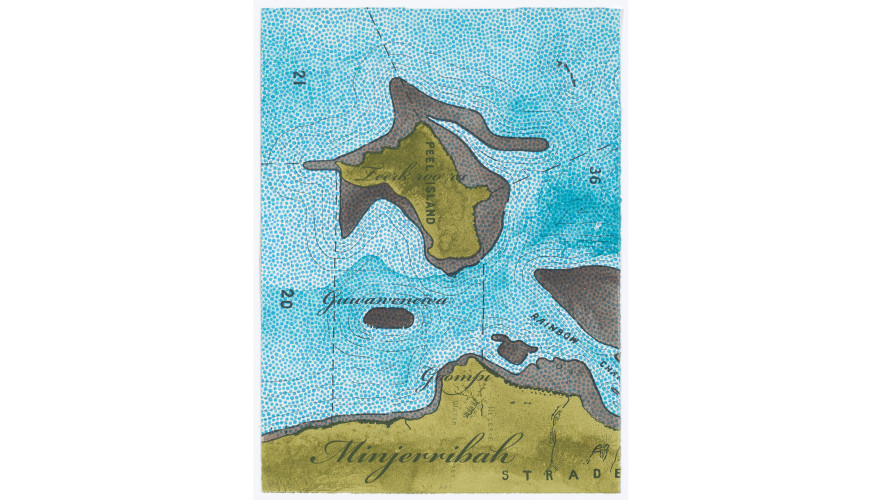
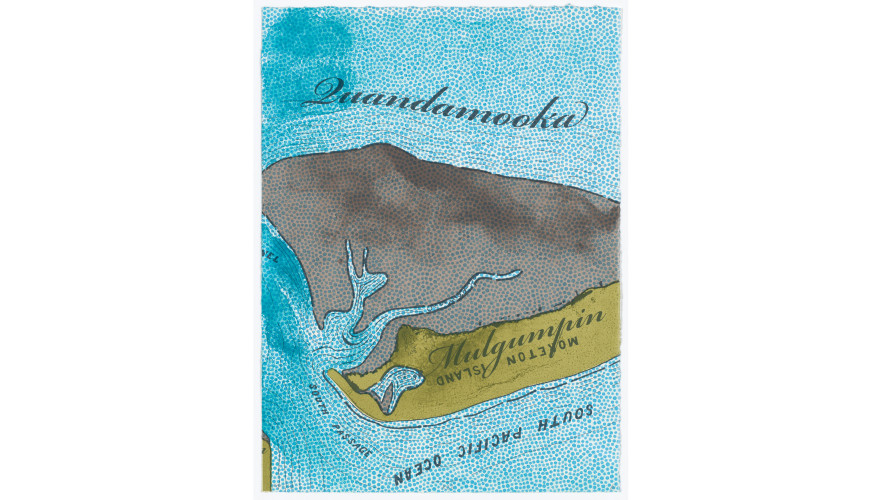
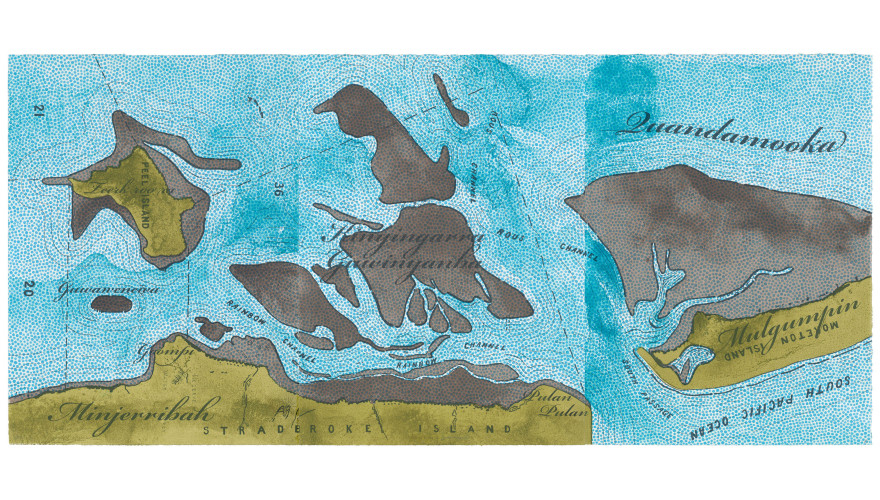
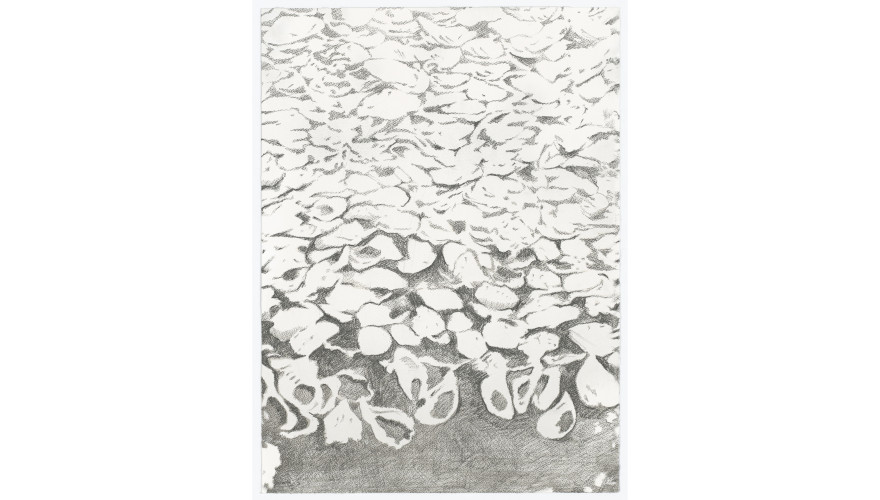
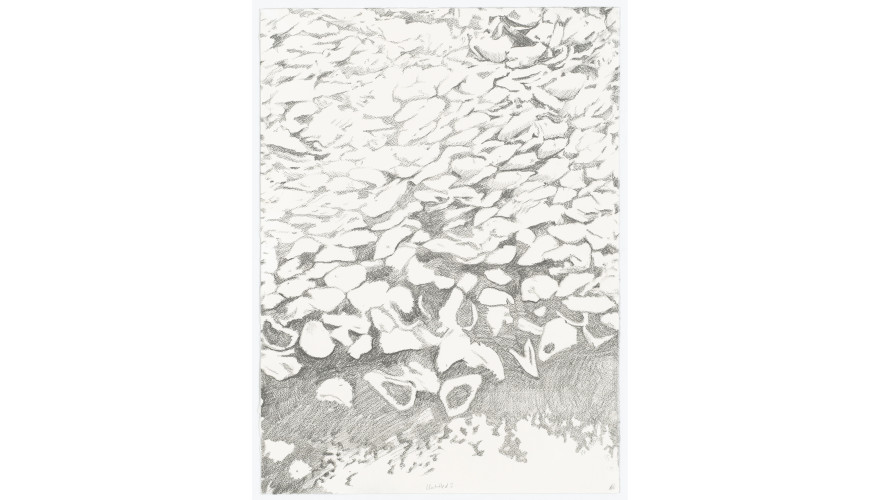
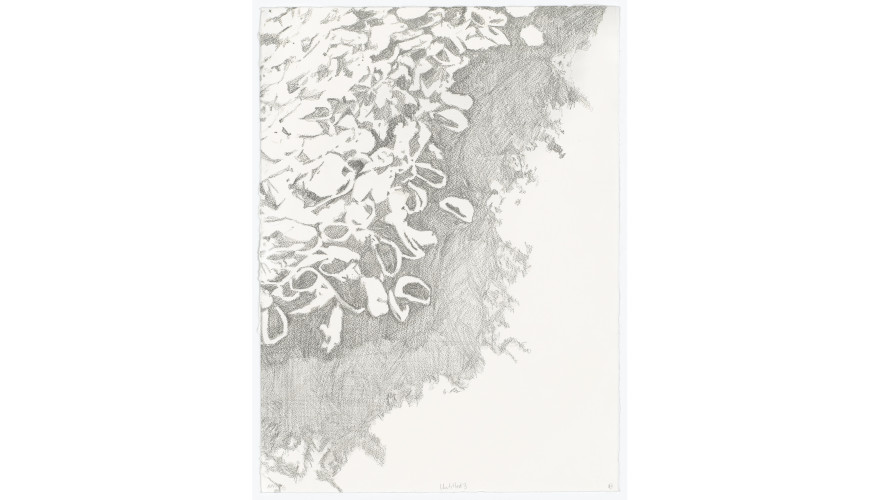
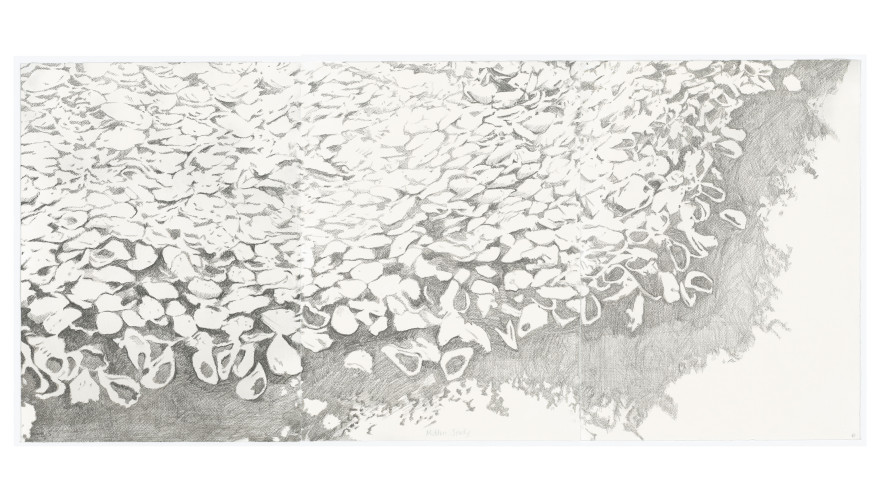
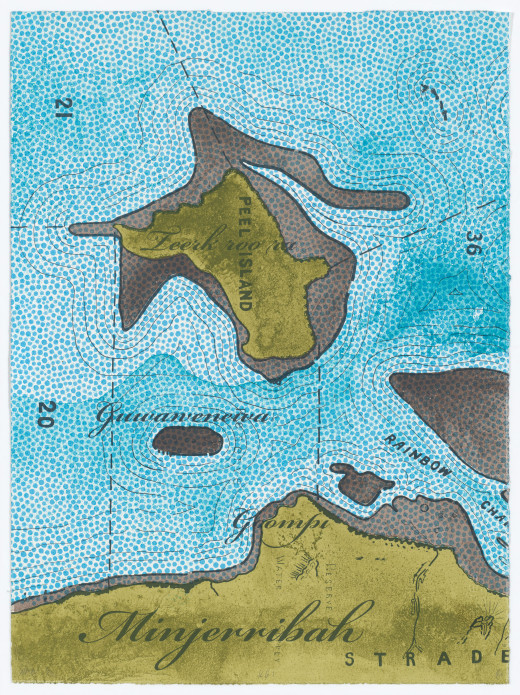
To mark the occasion, APW invited Richard's special friend and colleague artist Deborah Williams to curate an exhibition of Richard's prints. Selected from the APW Print Collection of workshop proofs, the prints on display include many works rarely seen before - providing a glimpse of Richard's print oeuvre from the 1980's and early 1990's that include beautifully rendered hand-drawn lithographs and delicate intaglios.
"Richard’s prints from this period are monumental, demonstrating extraordinary proficiency in intaglio techniques. His soft ground textures and mark-making are robust, seductive, and Rouault-like in their intensity. The images themselves carry an iconic, almost religious quality that speaks to his ambition and vision during these formative years."
Deborah Williams, February 2026
Over the years, Richard produced almost 60 prints in the APW studios. He also spent a period working at APW as the Studio technician and printer. Throughout his career, Richard continued to contribute to APW as a guest curator, an exhibiting artist, a collaborator and avid APW supporter.
Richard was a passionate advocate of LGBTQIA+ rights and was actively involved in APW's annual contribution to Victoria Pride (since its inception). It is therefore very apt that this special exhibition of Richards' work launches with a celebration on the afternoon of the 2026 Pride festivities along Gertrude Street.
Richard worked tirelessly to support the next generation of printmakers in Australia, including through his time at RMIT. Richard's APW George Collie Memorial Print Award celebrates his commitment to the art of printmaking - his creativity, wisdom and generosity of spirit that continues to exist throughout the Australian print community.
_______________
What follows is an essay by Deborah Williams, deivered at the opening reception of Richard Harding's 'Tickled Pink' exhibtion. APW thanks Deborah for her time, her insight and decades-long, unwavering support for Richard and his art-practice.
I would like to thank the Australian Print Workshop where Richard was not only employed for some time but also utilised the access studio for many years. Richard facilitated strong connections with the workshop, both personally as an artist but also in his role as Studio Lead of Printmaking at RMIT University.
When I was given the privilege of going through Richard's archive at the Australian Print Workshop, I'll admit I went in thinking I knew his work well. We'd been friends for so many years I'd seen countless pieces, and we'd talked endlessly about art. And yes, I'd seen these prints before—when I was younger, not long after or even when they were being made. But perhaps I didn't take as much notice as I should have then.
Going through them now, these prints from the late 80s and early 90s stopped me in my tracks. What I'd perhaps taken for granted in some way previously, I now saw differently. They revealed something I hadn't fully grasped about Richard's artistic journey—or perhaps hadn't been ready to see. This was Richard at a particular moment: ambitious, technically fearless, still finding his voice but already speaking with extraordinary power.
[Several of the] intaglio works you see here are monumental—not just in scale, but in presence. His command of soft ground technique, the way he built up those textures, the mark-making, the scraping back into the plate, is robust, seductive, almost Rouault-like in its intensity. These images carry an iconic quality, something almost religious in their weight
What's remarkable is understanding where this came from. I may very well be drawing a long bow here, but it is a possibility - Richard had lent me a book once—a collection of early Peruvian sculpture—and I kept it for months. When I was considering what I'd experienced making these selections, I remembered that book, and it was still on the shelf in his old office. And the affinity was there: these prints have a sculptor's sensibility. Richard was translating three-dimensional mass, the weight and monumentality of those forms, onto the two-dimensional matrix.
And then there are the smaller dry-points. These offer something completely different—they're intimate, almost diaristic. Here are images of family, friends, daily life. Moments of recovery. Scenes from his domestic space. The texture of living. They show us another side of his vision, equally skilled but working in a different emotional terrain.
I think this is why I wanted to show this body of work. Many of you knew Richard in his later years, saw the work he was making more recently, understood the artist he'd become. But these pieces—they give us Richard at a different moment. They show us his foundations, his ambitions, the sheer technical mastery he'd already achieved. They remind us of the depth and range of his practice.
Richard's prints are technically extraordinary, yes. But more than that, they're generous. They invite us to see what he saw, to feel the weight of form, the texture of life, the ambition of making something that matters.
Deborah Williams, February 2026
_______________
Exhibition continues until Saturday 14 March 2026
APW Gallery hours are: Tuesday to Saturday, 10am to 5pm.
Australian Print Workshop Gallery
210 Gertrude Street, Fitzroy, Victoria 3065
T: (03) 9419 5466 E: contact@australianprintworkshop.com
Contact us to join the APW mailing list and receive updates about APW programs.
Australian Print Workshop Gallery is fully wheelchair accessible.
A designated disabled parking space is located on Gertrude Street, just a few doors away from the APW Gallery main entrance.
No need to call ahead, just come on in.
Australian Print Workshop acknowledges the Traditional Owners as the custodians of this land, recognising their connection to land, waters and community. We pay our respects to Australia's First Peoples, and to their Elders, past, present and future.